Pin Drop
gamefinity.io · Geography
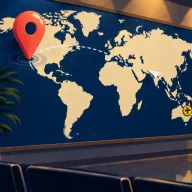
Shares Globle's love of the map but asks the question the other way: you know the place and must mark it on a world map with no labels, with distance deciding your score across five places.
Globle hides one country and lets you name any other to start. Each guess is shaded on a 3D globe, pale when it is far from the answer and deep red when it is close, and there is no limit on attempts, just a tally of how many you needed. It works because every wrong answer still teaches you something, so the map fills in like a slow game of hot and cold.
Each pick turns distance into a clue or asks you to find places on a map. First come a pin-the-place game and a buried-object hunt, then the nearest relatives of Globle's color-by-distance search, and last a set of route and globe-tapping games for players who mostly enjoy the map.
Shares Globle's love of the map but asks the question the other way: you know the place and must mark it on a world map with no labels, with distance deciding your score across five places.
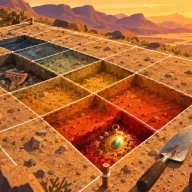
Built around homing in on something hidden, as Globle is: you dig squares and use the clues each dig turns up to locate a buried object, no more than six digs per site, then move on until sundown.
Applies Globle's color-by-distance shading to capital cities on a 3D globe, and draws arcs between your wrong picks to help you close in on the answer.
Another no-limit country hunt where the map responds to each guess, graying out continents that are wrong and steering you nearer, with the fewest guesses as the goal.
Swaps countries for a single hidden spot on the world map and narrows it down with every attempt, with an expert setting and player-made hunts for extra rounds.
You find the secret country by clicking on a world map you can zoom, racing a timer, with a new hint after each wrong click instead of a color.
Keeps the distance clue but limits you to six guesses and starts from the country's outline, so it rewards knowing shapes where Globle rewards knowing neighbors.
Gives a table of comparisons instead of a colored globe: each country you try is checked against the answer's continent, population, climate and compass bearing.
Shifts the target from a country to a city that you track down by roaming a world map, with one more written clue after each miss.
You touch five spots on a spinning globe and score by closeness, with a short bit of history for each, a good fit for players who enjoy the globe itself more than the deduction.
Puts the neighbor knowledge Globle builds to work: connect two countries by naming each one along the land route, and the number of guesses allowed depends on how long that route is.
Thinks in distances too, but you travel between cities by hopping to nearby ones, aiming for the fewest jumps from start to target.
No. You can keep naming countries until you find the answer, and the game records how many tries it took. Because nothing ends early, Globle is friendly to beginners: even a wild first guess gives a color that points you toward the right part of the world, and the next few guesses tighten the circle.
Countries you guess are shaded by their distance to the hidden one, from pale tones for far away to dark red for very close. A country that borders the answer shows up in a deep shade, so a cluster of dark countries usually means the target sits somewhere between them.
Globle Capitals uses the same idea on a 3D globe, with a capital city as the hidden answer and arcs drawn from your misses to help close the gap. For a city search with written clues instead of colors, Sporcle's WorldPlay makes a good companion.