










Paint Chips
gamefinity.io · Visual
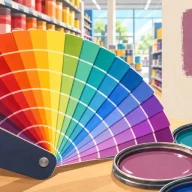
A color flashes up briefly, then you rebuild it on a picker from memory. Five shades a day, scored on how near you get.
Games for your eyes rather than your vocabulary: judging colors, angles and proportions, spotting what changed, folding and fitting shapes, and finding small things in big pictures.
They tend to be quick, usually two to five minutes, which makes them easy to add to a daily lineup.
A color flashes up briefly, then you rebuild it on a picker from memory. Five shades a day, scored on how near you get.
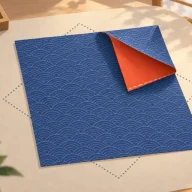
Crease a sheet of paper over itself, step by step, until its outline matches the shape shown, using as few folds as possible.
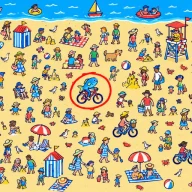
One enormous illustration hides five odd objects. Find them in any order, as quickly as you can.
Squeeze a teapot, a lamp and even a piano into a moving box, with real physics deciding what fits.
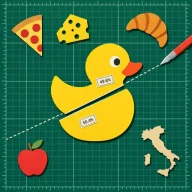
Make one straight cut to split a shape into exact halves, thirds or quarters.
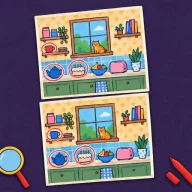
Five scenes with five differences each: tap what changed before the clock runs down.
Estimate the size of the angle on screen in degrees, refining your answer from the feedback on each of four attempts.
Work out which three colors, and in what proportions, were mixed to produce a target swatch, with six tries and an accuracy percentage after each.
Type a six-character hex code to match the color shown, with each digit marked as too high, too low or correct; a Mini edition also runs.
Type color names from a fixed list to find the mystery shade, with each guess scored by percentage of closeness to the target.
Five colors are shown briefly; rebuild each from memory and see how close you came, with a daily set under the calendar icon.
Pick which of several candidate outlines matches the reference shape, working through five shapes in a quick test of your eye.
Join points with lines to complete triangles and gradually expose a hand-built picture, much like the NYT game Vertex.
Click photo tiles to turn them upright again, trying to finish in no more clicks than the ideal solution; a three-second peek at the full image costs one click.
Spin oddly shaped pieces around their pivot points until all of them fit inside the border with no overlaps.
Assemble a jigsaw built from a vintage news photo in the LA Times collection, then browse older puzzles and track your solve times.
Three grids of rising difficulty arrive each day, and each must be filled with pieces you can rotate and also resize to fit; weekly leaderboards restart Mondays.
Group map tiles into connected districts, each with the same number of houses, so the assigned party wins more seats than any rival, using packing and cracking.
Fit a set of polyomino pieces onto a calendar board so the only uncovered squares spell out today's date; five board variants range from quick to tough.
Guide your red square to the blue goal along the longest route you can find, moving only toward sides where you touch a single neighboring rectangle.
Starting from a heavily zoomed-in picture, work out its subject, zooming out step by step or revealing a first letter when stuck, within six tries.
Compare two versions of a picture and mark all ten changes on the upper copy, or print it with or without its answer key.
Tap the spot you believe is the combined balance point of a cluster of shapes; three rounds add more shapes, and each allows one guess scored out of ten.
Draw a single straight slice through the shape on screen, trying to split its area into two exactly equal pieces.
Six quick perception tests covering angles, halving, landing spots, balance points, counts and timing, each with five rounds and one attempt per day.