Daily games for seniors: crosswords, word searches and number puzzles
Updated · By the Today's Dailies editors
The puzzles on this page are the familiar kinds: a newspaper crossword, a word search, a guess-the-word grid, a sudoku. Each brings one new puzzle daily, opens in a web browser on a tablet or computer, and asks for no account. They are grouped by kind, so a format you already enjoy sits beside a few close relatives.
Pace matters as much as format, so each entry reports what the game's own site says about time. Teeterly says outright that it has no clock, One Word Search keeps its clock out of sight until you turn it on, and on two others no clock appeared when they were checked. Where a site says nothing about a clock, neither does this page. Several carry ads, and print options are noted where a game has one.
Crosswords
A compact grid with mostly plain clues from a British paper, the Los Angeles Times crossword, and a single cryptic clue a day for anyone curious about cryptics.
The Guardian's compact crossword, with mostly plain clues and each answer's length in brackets. Buttons let you check, reveal or clear a single word or all of it, there is an anagram helper, progress is saved and a PDF copy can be printed. New grids appear Monday to Saturday, and no clock appeared when it was checked.
The Los Angeles Times crossword is free to solve in the browser, and its clues grow tougher day by day through the week, so Mondays are the gentlest. Logging in is optional; a free registration adds achievements and records streaks and scores. The same page links to the paper's Mini, Sudoku and Word Search.
Each day brings one cryptic clue, its answer length in brackets and its setter named. Free courses called Letterplay, Wordplay and Weirdplay explain the tricks setters use, through lessons and clues to solve. An account is only needed to track progress through the courses, and older daily clues are kept for members.
A classic themed grid in large print, a small square with just one word hidden in it, and the NYT's version, where the theme has to be worked out as you go.
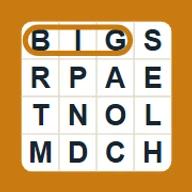
Twelve words on a theme such as hobbies or travel, set in a grid of big, widely spaced letters, or eight in a gentle puzzle. A new one is featured each day and earlier ones stay open. Buttons make the letters larger still, and any puzzle prints on one page, grid and word list together. Free, no account.
A 5x5 square of letters with just one five-letter word inside, reading in any direction, backward included. Each find brings a new square, ten per day. The clock is hidden unless you enable it in Settings, and it waits for your first find before it starts; quicker days earn more stars, up to five.
The NYT's themed word search: 48 letters in a six-by-eight grid, used up entirely by the day's theme words with no overlaps, while one word, the spangram, stretches between opposite sides. Finding three words that are off the theme earns a hint. The NYT's help page says Strands needs no subscription.
The colored-tile format Wordle made famous, a version with a roomier allowance of guesses, and one built on short phrases. The word game picks cover many more.
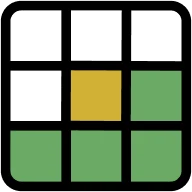
One five-letter word a day and six tries to find it. After every guess, colored tiles sort its letters into correctly placed, present but misplaced, and absent. The NYT's help page says the daily needs no subscription, and an account only matters if you want stats on more than one device. Its words are picked by editors.
Four hidden words share a single run of guesses: Classic allows nine to solve all four. Merriam-Webster hosts it, and its Chill mode gives twelve guesses and leans on fewer unusual words, a gentler start for anyone who finds Classic tight. In Sequence the words come one after another, and Rescue asks you to repair a computer's bad start.
A Wordle-style grid where the answer is a short phrase rather than one word, and every guess has to fill all the spaces with real words. Six attempts are allowed, and besides green and orange, a purple tile marks a letter found in another word of the phrase. A Practice tab offers more after the daily.
Sudoku needs no arithmetic at all; the others ask for a little, from combining numbers to balancing weights. The puzzle picks cover more logic and number games.
The New York Times posts three sudoku grids each day at three levels, from Easy to Hard, so you can stop at whichever suits the day. Its start screen promises a numbers game without the math. Logging in is optional, and an ad plays first unless you subscribe.
A target number and a set of numbers that appear when you press START. Combine them using the four basic operations until one result matches the target exactly. Any result can be saved and reused in a later step, a step can be undone, and Reset clears the slate. Past puzzles are kept in an archive.
One short brainteaser a day, set out in plain text on a site that carries no ads. Buttons beneath it offer workings, a hint, the answer and a printable copy. Puzzles change at midnight GMT unless you set a different time zone, and about four weeks of earlier ones are listed by date.
Five balance puzzles a day: drag objects, their weights shown on brass labels, onto the notches of a beam so that weight times notch matches on both sides, then press Weigh once. Its page states there is no clock, so each puzzle can be worked out at whatever pace suits you.
Every pick is listed on Today's Dailies, so it is free, plays in a web browser and opens its daily puzzle without an account. Rules, clocks, hints and print options were read on each game's own site or help page on November 7, 2026. A game is said to have no clock only where its own page says so or where none appeared on the puzzle when it was checked. Picks are grouped by kind of puzzle, not ranked. All 13 picks were opened in a phone-sized browser between November 4 and November 7, 2026 and loaded, and each one fit the screen without sideways scrolling.
The familiar formats make an easy start: the Guardian's Quick Crossword or the Los Angeles Times crossword, Big Print Word Search with its large letters and print option, and Wordle, with Quordle's twelve-guess Chill mode as a gentler step up. Each one is free, and none asks for an account.
Which of these daily puzzles have no timer?
Teeterly's page says it has no clock, and One Word Search shows its clock only if you enable it in Settings. No clock appeared on the Guardian's Quick Crossword or the BrainBashers daily puzzle when they were checked. For the rest, this page makes no claim either way.
Can these daily puzzles be printed?
Some can. Big Print Word Search prints any puzzle on one page with its word list, the Guardian's Quick Crossword offers a PDF version, and BrainBashers has a print button under each daily puzzle.
Is an account needed to play these puzzles?
No. Every game here opens its daily puzzle without one. Some offer an optional account: the NYT's keeps Wordle and Strands stats across devices, and a free Los Angeles Times registration adds achievements and streaks.