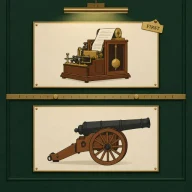
Chronophoto gives you five photographs a day and one job for each: work out the year it was taken. You set your answer on a timeline marked in decades from 1900 to the 2020s, and nearer guesses score higher. The game pitches itself as a test of what you know about pop culture, history, fashion and technology, since any of those can date a picture. Unlimited and Party modes sit beside the daily, and the daily can arrive by email.
Older Than You Think leads as a quick chronology game, then come the photo-dating games that copy Chronophoto's core most directly. After them are ones that pair the year with a place on a map, and finally games that date other things from the past century: cartoons, YouTube uploads, newspaper headlines and film stills.
A quicker cousin of Chronophoto's timeline: you see a pair of things, such as inventions, brands or events, and tap the older one, then the dates for both appear, so each pair teaches you something about when things happened.
The most direct match: five old photographs to date, one answer each, with points adding up over the set. It is the same exercise as Chronophoto's daily five, just with different pictures.
Also five real photos to date, but on a scale reaching back to 1850, half a century earlier than Chronophoto's, and you can reveal digits of the year if a picture defeats you.
Its five daily pictures are public-domain photos covering subjects from city life to space travel, dated with a year slider. Hitting the year exactly is worth 200, and each year of error takes off eight, so you always know what a near miss costs.
Adds a map to the timeline: for every old photo you place a pin for the location as well as setting the year, and the daily round runs to five pictures, the same count as Chronophoto.
Another where-and-when photo game: mark the location on a map and choose the year with a slider. If you want help, hints are available and a chatty bot comments on your thinking.
Works from a historical scene rather than a snapshot: you mark where it happened and when, and every player faces the identical scene that day, so comparing results with friends is straightforward.
Puts you inside the picture: each of the five daily scenes is a panorama of a past moment that you can turn all the way around before choosing a map location and a year, with points for coming close on each.
Dates drawings instead of photos: you order a batch of cartoons from The New Yorker by when they appeared, reading the art style, the clothes and the humor. It leans on the feel for changing fashion and culture that Chronophoto rewards.
Moves the question to video: five little-watched YouTube clips, and for each you estimate the year it was uploaded, earning more for a closer answer, so the look of the footage becomes your evidence.
Dates words instead of images: five real New York Times headlines from 1900 on, each to be matched with the year it was printed, with more points for nearer answers, over almost the span Chronophoto's timeline covers.
A second headline game: five undated news stories, each placed on a year slider, and every year of error costs two of a possible 100 points, a clear rule for a familiar task.
Applies the same thinking to cinema: a still from a film, and you decide where on Earth its scene is set and in which year, scored on how close you come on each.
Five. Each round shows one photograph and a timeline marked by decade from 1900 to the 2020s, and you set the year you think it was taken, with closer answers scoring more. When the daily is done, Unlimited mode keeps serving photos, and there is also a Party mode.
Can I keep my Chronophoto streak on a new phone?
Yes, by signing in, which carries your streak across devices. You can also sign up to get the daily puzzle by email. If you spot a photo that seems wrongly dated, the game asks players to report it to its support address, since it admits that dating mistakes happen.
Which games add a location to Chronophoto's year guess?
TimeGuessr, WhenTaken and EraGuessr all ask where a picture was taken as well as when, with a map pin next to the year. HistoryGuesser does the same with 360-degree scenes you can look around, and WhenTaken Movies moves the idea to film stills.