Letroso, from the Daydash studio behind Contexto, asks you to find a secret word that can run to ten letters. Because the length is not fixed, its feedback is about order rather than position: each letter's color and shape show whether it belongs, whether it falls in the right sequence and whether letters appear side by side. In the site's own example, one guess reveals that the answer begins with EX and finishes on E. Reading that looser feedback is what makes it feel unlike a standard five-letter grid.
Games that also let the word length vary lead the list, from a guesser that flags a guess missing the length by one to Wordle versions where you pick it. Then come secret-word hunts that give unusual feedback, by meaning, alphabet position or letter arrangement, including Contexto from the same studio.
The closest match on length: the hidden word runs between four and nine letters, seven tries come with the usual Wordle coloring, and an extra marker tells you when your guess is one letter off the answer's length.
Another choose-your-length puzzle, with a twist that changes how you guess: the letter E is banned from every answer and every guess, so many of the usual openers are off the table.
Stretches the classic grid to six letters, closer to the longer words Letroso can throw at you, with six tries guided by colored tiles and an unlimited mode once the daily is solved.
Gives a small choice of length, five letters or six, and six attempts with right-spot, wrong-spot and absent coloring, plus unlimited play, a gentle step toward Letroso's variable answers.
From the same Daydash studio, but the feedback is about meaning alone: any word you type gets a rank for closeness in meaning to the target, guesses are unlimited, and you win at number one.
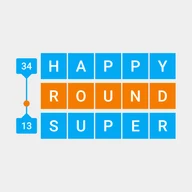
Strips feedback to one fact per guess: whether the secret English word falls earlier or later than yours in the alphabet, a puzzle about ordering much as Letroso's clues are.
Another alphabetical hunt: every guess narrows the window of words that sit before and after the five-letter answer you are hunting, with twelve attempts to pin it down.
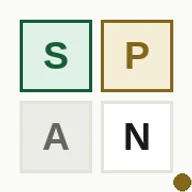
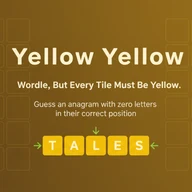
Puts letter order at the center, as Letroso does: the goal is not the hidden word but a reshuffle of its five letters in which none stays where it started, turning every tile yellow.
Up to ten letters, and the length changes from word to word, so your guesses can be different lengths too. That is why Letroso's feedback describes order and grouping rather than fixed slots: letters can be marked as present and in sequence, present but out of order, or sitting together as a block.
How do you read Letroso's clues?
The site's example uses the answer EXAMPLE. Guessing PERMIT shows that P and E belong in the answer, in that sequence, though apart, and that M is present but out of order. IMPLY shows that M, P and L sit together, and EXCUSE reveals how the word starts and which letter it ends on.
Does Letroso have more games than the daily?
Yes. Previous days can be replayed from a calendar, and an unlimited mode serves fresh words. Daydash, the studio behind it, also makes Contexto, Conexo, Expresso and its newest game, Ordeno, all linked from the same menu, so there is plenty more in the same family.