PokeDoku lays out nine boxes, each sitting where a row category meets a column category, such as Fire and Kanto or Legendary and Hoenn. You have nine guesses for nine boxes, answers lock in once placed, and no Pokémon may appear twice. A type category needs only one of a Pokémon's types to match, and region categories go by where it first appeared. Each answer carries a percentage, the total is your uniqueness score, and lower wins, which turns every box into a hunt for the valid pick others missed.
Grids come first, starting with three that keep Pokémon in the boxes, then other games that cross two traits per square, from FromSoftware bosses to MLB players. Three Pokémon guessing and sorting games round out the list for players who mainly want somewhere else to use what they know about types, generations and evolutions.
The nearest copy of the PokeDoku formula, with nine squares to fill in nine guesses and a score based on rarity, though its crossing traits stretch past types and regions to include a move a Pokémon can learn and its stage of evolution.
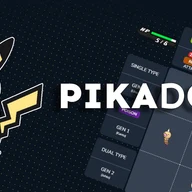
Another three-by-three Pokémon board, this one with a type on both axes, so each cell needs a dual match. Every choice is final, as in PokeDoku, and a rarer answer earns bonus points instead of lowering a score.
Keeps the row-and-column Pokémon grid but writes trickier rules, blending fossils, evolution stages and generation clues with type matchups, so a square might ask for something that takes four times the damage from Grass.
A PokeDoku variant built on battle knowledge: each square needs a Pokémon whose typing takes the damage its row and column call for, no type can repeat, and a hard mode keeps types hidden while you search.
Moves the same crossing-trait grid from Pokémon to FromSoftware bosses, from Demon's Souls up to Elden Ring. Every one of the nine squares must suit one trait from its row and another from its column, and each pick is scored for rarity.
League of Legends champions fill this version, each square crossing two champion traits, for example the year of release. PokeDoku's nine-guess limit becomes three lives, and rarer correct champions score higher rather than lower.
A Brawl Stars take on the grid: every square on the board needs a brawler that fits both its row and its column, such as a brawler's class or how fast it reloads, with nine guesses and rare picks to aim for.
Keeps the rarity game that makes PokeDoku tick but opens the boxes to any answer at all, as long as it fits both the row category and the column category, with niche picks earning a lower, better score.
The sports grid that shares PokeDoku's rules almost exactly: a guess for each of the nine squares, with obscure answers scoring well on rarity, only here each square wants an MLB player who fits a team or statistic on each axis.
Leaves the grid behind but keeps you thinking in Pokémon traits: one hidden Pokémon, nine guesses, and emoji feedback showing how each guess compares with it on type, generation and similar details.
Works the same type-matchup knowledge as Weakdoku: you find a hidden single or dual type in six tries by guessing Pokémon, and tiles compare damage multipliers against every attacking type.
For Pokémon fans who like the categories more than the grid: sixteen Pokémon must be split into four groups by a hidden link, such as being fox Pokémon, with as many attempts as you need plus a hint button for tough sets.
Each answer comes with a percentage, and your uniqueness score adds those numbers together. Lower is better, so a correct but rarely chosen Pokémon helps you more than the obvious one. Since answers lock in and nothing can be reused, it pays to think about the whole board before spending a common answer on an easy box.
Do regional forms and Mega Evolutions count in PokeDoku?
They do, under set rules. A regional form whose name ends in a region counts for the region where that form debuted, while Mega and GMAX forms follow the debut region of the base Pokémon. Primal forms are not counted in Mega categories, and Pokémon from The Indigo Disk DLC do not count as Unova. Categories draw only on the core series games and Pokémon Champions.
When does a new PokeDoku puzzle come out?
A fresh grid arrives at midnight Eastern time each day, and the site has lately added Tic Tac Toe lobbies you can set up yourself. Between daily grids, Pokegrid and Pikadoku give you more Pokémon boards with different crossing rules, and Weakdoku narrows the theme to type weaknesses.