Etch
mindloftdaily.com · Math & Logic
Solve a nonogram by shading cells to match the run lengths listed for each row and column until a picture emerges, sized 10x10 on weekdays up to 20x20 on Sundays.
DailyPlay ↗
Page 9 of 10: 40 games, from Etch to Numgrove. The shelf’s first page starts with the games to try first.
Solve a nonogram by shading cells to match the run lengths listed for each row and column until a picture emerges, sized 10x10 on weekdays up to 20x20 on Sundays.
Reverse the usual arithmetic drill: given a number, pick which of four expressions produces it, across twenty problems with 20 seconds each and one life.
Carve the grid into rectangles, one per number, each covering as many cells as its number says, a shikaku with one deducible answer and a 12x12 Sunday edition.
Clear a stacked mahjong solitaire layout by pairing matching tiles, choosing only tiles that are uncovered and open on at least one side, so the removal order matters.
Six short puzzles set in a Finnish village, from Woodpile and Snowplow to Ricochet and Heat Pipes, scored against players worldwide to earn logs for a shared sauna.
Break a four-digit code of distinct digits that never opens with zero in eight tries, with green, orange and gray marking where each digit stands.
Feed numbers from 0 to 999 into a machine with a hidden rule, read its outputs over up to eight experiments, then prove the rule by predicting three results.
Pick doors through a branching story where all but one route ends in death, and use how each death happened to work out the single rule marking safe doors.
Spot the pattern in a short run of numbers and fill in the one that is missing, with three guesses at the gap.
Trace guesses at a hidden route through a 4x4 grid of cells, using color feedback to pin down the exact path in six tries, across five difficulty levels.
Decide whether each suspect in a grid is criminal or innocent from clues alone; every right call turns a card and adds a clue, with difficulty rising through the week.
Rebuild the original four-step path on a 4x4 board, tapping tiles in order and using what each of your six guesses shows, with five difficulty settings.
Fill each cage with numbers that reach its target by adding, multiplying, subtracting or dividing, with KenKen row and column rules added at harder levels.
Place numbers in sequence on a 5x5 Mini or 7x7 Full grid so that neighboring sums work out, a logic puzzle that blends arithmetic with spatial reasoning.
Solve the day's chess tactic by spotting the winning sequence of moves, with positions growing tougher from Monday through Sunday.
Open a small-town case file from Caldmere, weigh clues against three suspects with motive or access, and name the culprit to earn a detective rank.
Fill in five blacked-out words in a witness statement from a fictional town, guessing each from context, with six guesses in all and a few tips to spend.
Clear a 15x15 minefield hiding 35 mines on the same board as every other player, with one attempt only and a timer running.
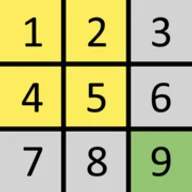
Split a 10x10 grid into rectangles that each hold one number equal to their area, racing a worldwide leaderboard for the fastest time.
Place six markers so each row, each column and each colored region has exactly one, none touching even diagonally, and their digits hit the day's target sum.
Seat ducks on a 7x7 grid until every pond has the count printed on its label in one connected group, keeping ducks of different ponds from touching edge to edge.
Play a hand of American Mahjong against computer opponents on the 2026 card, with every player dealt the same tiles and wall, from the opening pass onward.
Grow your territory out of the top-left cell by choosing colors that flood into matching neighbors, filling the 14x14 board in the fewest moves, scored against par.
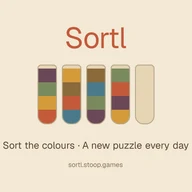
Pour colored layers from tube to tube until each is a single color, only ever onto a matching top or an empty tube, in one daily attempt scored against par.
Probe a secret rule by submitting sets of three numbers and seeing which ones fit, then pin down the rule from the pattern of yes and no answers.
Light up numbered cells so that the totals of every row and column hit their targets exactly, while keeping lit cells from touching above, below or beside one another.
Select neighboring numbered fruit that sum to exactly 10 to clear them from a 10-by-17 board, with one attempt per day and your time ranked globally.
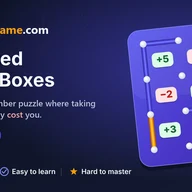
Draw edges in a dots-and-boxes endgame where every box carries a plus or minus value, and find the line of play that beats par against the computer.
Crack a secret four-digit number of distinct digits in ten tries, with plus marks for digits in place and minus marks for digits elsewhere.
Enter full rows of digits 1 to 9 as guesses, read colored feedback on each digit's cell, row and box, then use those clues to finish the sudoku.
Deduce each player's role at a Blood on the Clocktower table from what a witness recalls of the nights and days, locking in guesses over five rounds.
Solve a fresh murder case by questioning persons of interest and checking evidence, with only ten moves and two hints to name the culprit.
Pitch one tent beside each tree on a grid so that no two tents touch, even at corners, and every row and column holds its stated count.
One crown goes in every row, every column and every colored region, and no two crowns may touch, even diagonally at a corner.
Type a math function whose curve runs from the green start to the red target while dodging blue obstacles, within a 100-unit ink budget.
Pin down a secret four-digit combination using only a board of already-graded guesses, comparing their right-digit and right-position counts until one code fits.
Work out where each suspect stood on a floor plan from the clues, then name the culprit by pure deduction, with evidence-sorting and statement puzzles as extra cases.
Complete an immaculate-style number grid, finding for each cell a number that belongs both to the class named on its row and to the one named on its column.
Twenty mixed arithmetic problems against a one-minute clock, covering adding, subtracting, multiplying and dividing, with the same set for every player.
Fill the empty spots in a tree of numbers so each branch works out by addition or multiplication, with three levels of difficulty every day.