Cancelwise
cancelwise.com · Math & Logic
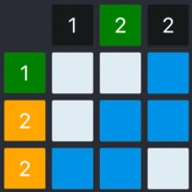
Strike out cells in a grid of positive and negative numbers so every row and column totals its target, at four difficulty levels from easy to expert.
DailyPlay ↗
Page 2 of 10: 40 games, from Cancelwise to Refiner. The shelf’s first page starts with the games to try first.
Strike out cells in a grid of positive and negative numbers so every row and column totals its target, at four difficulty levels from easy to expert.
Sudoku without the grid: place 1 to 9 so no digit repeats within an outlined group or along any colored line that runs across the board.
Pack a set of odd artifacts into the smallest box you can manage within 90 seconds, with your tightest fit recorded, wrapped in a lab-shift story.
Eliminate suspects with cryptic clues to work out which folklore creature and which otherworldly weapon caused the day's absurd news-report incident.
Place number tiles on a grid so every sum comes out right, keeping count of the moves it takes to finish the puzzle.
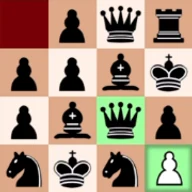
A chess puzzle where your piece turns into whatever it captures; plan a route that clears the board, in classic, epic, blitz or duel modes.
Twenty guesses to name a Magic: The Gathering card, with columns for mana value, colors, rarity, types and set turning green or filling partway as you get closer.
Split a grid of numbers into triples where two combine to make the third by adding, multiplying or raising to a power, using every number once.
Fill a 5x5 grid with no digit repeated in any row or column while obeying two rule symbols, such as greater-than arrows, from a rule set that changes daily.
Link tiles that are similar but never identical until the whole grid is filled, racing a two-minute clock while moves and errors are counted.
Solve a spatial symmetry puzzle built around hidden mirrors, with an optional walkthrough of demo moves before the day's puzzle.
Restock a Japanese vending machine so no brand or product type repeats in any row or column, while satisfying price and position clues from the manifest.
Work out how the goals in the day's match were scored, a soccer logic puzzle set in a fictional league with season standings that build day by day.
Use ten numbers to build three rising four-number sequences, each term after the second being the sum of the prior two, with one knot number in all three.
Find every black square in a numbered Kuromasu grid, where each number counts the cells it can see along its row and column, with three reveals to fall back on.
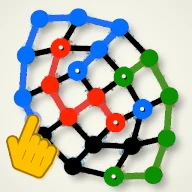
Link all the points on a grid together across three puzzles a day, working out the connections that satisfy the board.
Answer a quiz whose questions refer to its own answers, such as counting how many of them are answered D, with six puzzles a day across difficulty levels.
Trace a single closed loop that meets the demands of every number clue on the board, at easy, tricky or diabolical difficulty.
A loop logic puzzle: deduce the one closed path through the grid that meets every rule, with a new board each day.
Deduce a hidden winning mahjong hand, Wordle-style, from repeated guesses, with the round wind, seat wind and self-drawn win stated up front.
Use six small numbers and basic arithmetic to land exactly on a target value, with the difficulty rating changing daily.
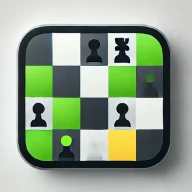
Fill in the hidden pieces of a checkmate position taken from a real game, with green, yellow and white squares marking right piece and spot, wrong spot or wrong piece.
Mark a path of blocks across a maze grid from left to right in six guesses, as each row and column reports whether its filled count and position are right.
A sheet of twenty mental arithmetic problems against a single clock, where a wrong answer blocks you until fixed, graded against everyone who played.
Cut every patch of the day's lawn efficiently, where tall grass needs two passes and rocks and fences block the mower, with only one attempt that counts.
Deduce where stars belong on a map split into regions, placing them so every rule of the grid holds, in a pure logic puzzle.
Classic sudoku on a 9x9 grid: place the digits 1 to 9 so none repeats in a row, a column or any of the nine boxes, with a fresh puzzle each day.
Solve a logic-grid puzzle by matching people to traits through written clues, some needing a bit of trivia, with hints costing stars from your rating.
Fill in a nonogram by shading cells to match the runs of numbers beside each row and above each column, with past puzzles to replay.
Make every number on the grid disappear using the fewest clicks you can, knowing that each click on a square raises its value.
Split a grid of digits into groups of touching cells, joined up, down, left or right, that each add up to the listed totals, at three lengths.
Fill a 7x7 number grid using pure logic, following rules taught in a short learn section, with a fresh handmade puzzle each day.
Four hidden digits and ten rows to find them, with the feedback on every entry helping rule out numbers and positions.
Three boxes make statements, some true and some false, and one hides gems; reason out which before opening, with two openings allowed each round.
Solve a Pell grid, a logic puzzle type from achromath, with earlier puzzles kept in an archive and a leaderboard for comparing solves.
Drop nine dice into a grid so their pips form the runs listed beside each row and column, a nonogram where a run can carry over from one die to the next.
Solve a cube-style twisty puzzle reduced to one dimension, turning pivots to sort a strip of pieces, with stats saved for every daily attempt.
Lead a lone prince across a chessboard while dodging the reach of enemy pieces, on a seeded layout everyone shares, with a move count and leaderboard.
Memory meets sudoku: turn over hidden weather tiles to pair matching symbols and complete every set of six for a type, with a clock running.
Select numbers that fit each bin's rule, such as Fibonacci, prime, above six or drawn with one hole, then drop them in, styled after macrodata refinement.