Cutle
pfiffel.com · Visual
The nearest match: one straight cut through a flat shape on screen, aiming to divide the area exactly in half. It is Halfsies in two dimensions, judged by area instead of weight.
Halfsies is a daily 3D slicing game: five objects, and you drag a knife across each one to make two halves of equal weight. The first object is a warm-up, a vase made of a single material, and you can hold to peek before you cut. A full round takes about three minutes, finishing it unlocks a Bonus Thirds mode, and an endless mode lets you keep slicing until three lives are gone. The appeal is pure feel: trusting your eye on where the weight sits.
Only one other pick on this list is about cutting, so it comes first. After it are 3D object games that deal in weight, balance or a toss, then games that ask you to judge size, count, distance, time or speed by eye, with nothing to measure against but your own sense of proportion.
The nearest match: one straight cut through a flat shape on screen, aiming to divide the area exactly in half. It is Halfsies in two dimensions, judged by area instead of weight.
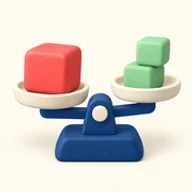
Shares Halfsies' interest in weight and its five-object rounds: guess how many everyday items, a house cat or a bowling ball for instance, it takes to counter each heavy thing on a scale.
Another five-object 3D game you play by touch: drag back and let go to toss each object so it ends upright, with five throws apiece and only the strongest one scored. A feel for each shape matters here too.
Physics again: drop twenty odd objects, a chihuahua and a window frame among them, onto a tower that keeps growing. The tower's height, measured in centimeters, is what you score, and three falls end the run.
Swaps cutting for measuring: five museum objects are shown in photos that hide how big they are, and you estimate the length of each one's longest dimension on a slider.
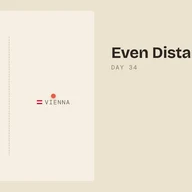
Halfsies splits weight evenly, and this splits distance. Pick a city as close to equally far from two given cities as you can, scored by the difference between the two distances, over three legs a day.
Judging by eye with a count instead of a cut: objects fall into a container, and over five rounds you guess the total that ended up in it, with extra modes for more practice.
Photos of a container, such as a tub of pasta, and you get three tries to say how many pieces it holds. Like Halfsies, it rewards reading the volume of something from what you can see.
Precision with no picture at all: five intervals of time play out, and you then try to match each length from memory. The daily round sits behind the calendar icon, and it asks for the same near-exact feel as a clean cut.
A line traces across the screen and disappears, and you redraw it from memory in one continuous stroke, and the daily run is scored. Hand control decides it, as with dragging the knife in Halfsies.
Visual judgment in motion: two reference passes, one slow and one fast, cover the same stretch at speeds you are told, then you estimate how fast a third vehicle moves, with as many as 1,000 points per round.
About three minutes. The daily set has five objects, starting with a warm-up such as a vase made of a single material, and each one gets a cut that you drag across it. Holding on the object lets you take a peek at it before you commit to where the knife goes.
Yes. An endless mode is always open and ends once you lose three lives, and finishing the day's five unlocks Bonus Thirds. Each daily set is numbered, with November 4, 2026 being No. 44, and a stats page keeps a record of how you are doing over time.
Cutle is the closest: you draw one straight line through a flat shape and try to leave equal areas on both sides. For more games played with 3D objects, Flipsies has you toss five objects so they land upright, and Weighsies asks how many familiar items would balance something heavy.