How to play sudoku: the rules, a first solve and where to practice
Updated · By the Today's Dailies editors
Short answer
What are the rules of sudoku?
Fill the grid so each row, each column and each box holds every number once. On a standard 9x9 grid that means 1 to 9, with nine boxes of 3x3; smaller grids use fewer numbers. Nothing is added up: the digits are just nine different symbols, and a well-made puzzle has one answer you can reach by reasoning.
Sudoku looks like arithmetic and is not. Nothing gets added or multiplied. The whole puzzle is noticing where a number cannot go, square by square, until only one place is left for it. The digits could be nine letters or nine colors and the game would play the same way, which is exactly what one of the picks below does.
This page gives the rules, solves a small made-up grid one step at a time, explains the two habits that carry most people through a first full grid, and ends with free daily sudokus that need no account, from 4x4 and 6x6 warm-ups to the standard 9x9. When the easy moves run out, the sudoku strategies page picks up where this one stops.
The rules in one minute
A standard grid is 9 squares across and 9 down, divided by thicker lines into nine boxes of 3 by 3.
Some squares start with a number in them. Those stay as they are; you fill in every other square.
Each row has to end up holding 1 to 9 exactly once. So does each column, and so does each box.
That is the whole rule set. There is no score inside the grid, and no number is worth more than another.
A well-made puzzle has exactly one solution, so every square can be worked out without guessing.
A first solve, on a 4x4
The same rules work on a grid of 4 by 4, with boxes of 2 by 2 and the numbers 1 to 4. It is the quickest way to watch the reasoning happen, because each row only ever has two gaps to think about.
1
4
4
1
2
3
3
2
Made-up example, not from any day’s puzzle. A 4x4 grid with boxes of 2 by 2. Rows run across and columns run down; the four steps below fill it.
Row 1 still needs a 2 and a 3. Column 2 already has a 3 at the bottom, so the 2 goes in row 1, column 2, and the 3 takes the square next to it.
Row 2 needs a 2 and a 3 as well. Column 1 already holds a 2 in row 3, so row 2 opens with the 3 and ends with the 2.
Row 3 needs a 1 and a 4. Column 2 now holds 2, 4 and 3, which leaves it only the 1, so the 4 goes in column 3.
Row 4 needs a 1 and a 4. Column 1 already has 1, 3 and 2, so it takes the 4 and the 1 fills the last gap. Check any row, column or box: each has 1 to 4 once.
Two habits that carry a first 9x9
Scan by number, not by square. Pick a digit that already appears five or six times, say the 7s, and look at each box that is missing one. Every 7 you can see rules out a whole row and a whole column for the boxes beside it. When only one empty square in a box survives, the 7 belongs there, even if that square could hold other numbers as far as its row is concerned. Then move to the next most common digit.
Once scanning stops placing numbers, pencil in candidates: the small numbers that could still go in each empty square, meaning the ones not yet used in its row, its column or its box. Most sites have a notes button for this. A square left with one candidate is decided, and so is a digit left with a single possible square in a row, a column or a box.
Expect the last third of a grid to go faster than the first. Every number you place takes a candidate out of three places at once, its row, its column and its box, so the grid gets easier as it fills.
Starting smaller
A 6x6 grid uses the digits 1 through 6 and boxes of 2 by 3. It plays exactly like a 9x9 but takes a few minutes rather than a quarter of an hour, which makes it a good place to practice the scanning habit. A run that goes 4x4, then 6x6, then 9x9 is another way in.
A 6x6 grid each day, where every row, column and two-by-three box takes 1 to 6 once. Notes and hints that explain the next deduction are built in, there is an unlimited mode at four levels, and earlier days can be replayed. The next grid arrives at the player's own midnight.
Three grids in a row, 4x4, then 6x6, then 9x9, where finishing one turns it into the next, and each has one solution. It is a race: your total time sets your place on the day's leaderboard, so it rewards quick scanning more than slow pencil work. Past days sit in an archive.
Not a daily puzzle: an endless chain of 6x6 grids against a clock that starts at two minutes and wins back time with every grid you finish. It works as a drill for the number-scanning habit on the days when one puzzle is not enough practice.
Each of these posts a new 9x9 every day and plays in a browser with no account. They differ mostly in what a mistake costs and in what they keep for you afterwards.
One medium 9x9 for each UTC date, shared by every player, with a streak counter for coming back. Separate Easy, Hard and Expert grids sit beside it when one medium puzzle is not enough, and the site says each of its puzzles has a single solution.
A 9x9 dated for the day, with a running clock, a score and a limit of three mistakes. Earlier days are a date picker away, and a print button gives a paper copy for anyone who would rather solve with a pencil.
A classic 9x9 with notes, undo and three hints, on a site whose maker says it carries no ads. Streaks stay on the device without an account, a free account opens the last two days, and a paid tier adds a second daily grid.
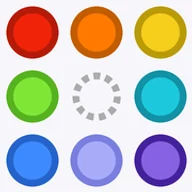
Sudoku with nine colored bubbles in place of digits, which makes the point that the puzzle was never arithmetic. The daily grid gives three lives, rewards runs of correct placements with a growing multiplier, and offers symbols for colorblind players.
Daily Sudoku on PlayToffee changes with the UTC date and Mini Sudoku at each player's own midnight; the other picks give no time on their pages, so the safe habit is to play during your own day. Every pick here is free in a browser with no account. DailyPlay sells a paid tier with a second daily grid and Bubble Sudoku links an app, and neither is needed for the daily puzzle. When the games on your list reset is on the reset times page.
How these were picked
The rules are the standard ones, and the made-up grid was solved by hand in the four steps shown. Each pick's line was written from its own page, read on the day of the check. All 7 picks were opened in a phone-sized browser between November 7 and November 11, 2026 and loaded, and each one fit the screen without sideways scrolling.
No. Nothing is added or multiplied. The digits are only labels, and a sudoku made of nine colors, as in Bubble Sudoku, plays exactly the same way.
Can a sudoku have more than one solution?
A well-made one has exactly one, which is what lets you finish it by reasoning without guessing. Daily Sudoku and Sudoku Shift both say each of their puzzles has a single solution.
What is the easiest way to start a sudoku?
Take the digit that already appears most often and look for the box where it has only one square left. Place it, then do the same with the next most common digit before you start writing in candidates.
Where can I play a free sudoku every day?
Every pick on this page posts a new puzzle daily and plays free in a browser with no account: 9x9 grids from PlayToffee, OnlineSudoku.io, DailyPlay and Bubble Sudoku, and smaller grids from Mini Sudoku and Sudoku Shift.