Several newspapers and puzzle sites post a free crossword each day. The L.A. Times publishes a full-size grid that gets harder through the week, the Guardian runs its Quick from Monday to Saturday and its Cryptic on weekdays, and Puzzmo, Crossword Club and DailyPlay put up a new grid daily.
What is the difference between a quick and a cryptic crossword?
A quick crossword uses plain definitions: the clue means the answer. A cryptic clue hides the answer twice, once as a definition and once in wordplay such as an anagram or a word tucked inside other words. The Guardian publishes both.
Which free daily crosswords are full size?
The L.A. Times crossword is a full-size newspaper grid, and DailyPlay's Crossword Maxi is 15x15 with about 76 clues. Mind Loft's Encore is smaller, 9x9 on most days and 11x11 on Sundays. The New York Times’ own daily crossword is full size as well, but its help page keeps it for subscribers to its Games, All Access or Home Delivery plans, so it is not listed.
Is there a daily crossword with just one clue?
Yes. Minute Cryptic, The Daily Cryptic and Daily Crypticle each serve a single cryptic clue a day, with hints for when the wordplay will not give.
Every crossword here works the same way at heart: numbered squares, clues running across and down, and each answer sharing letters with the ones it crosses. What changes from site to site is the size of the grid, the days it appears and what costs money. This page keeps to crosswords you can solve free in a browser, from full 15x15 newspaper grids to 9x9 boards and single cryptic clues. The five-by-five minis and the midis have a page of their own.
Newspapers set their own calendars. The Los Angeles Times' crossword changes over at midnight in New York and gets harder from Monday toward the weekend. The Guardian's Quick runs Monday to Saturday and its Cryptic on weekdays, both from midnight UK time, and Vox posts from Monday to Saturday. Puzzle sites such as Puzzmo, Crossword Club and DailyPlay put up a grid every day, and the first two sign each one with the name of the person who built it.
Cryptic clues are a different sport. Each one hides its answer twice, once as a plain definition and once in wordplay such as an anagram or a word tucked inside other words, so the sites that serve a single cryptic clue a day, with hints that explain the trick, are a gentle way in. Where a site asks you to log in or pay, it is usually for streaks, older puzzles or extra grids rather than the day's crossword.
The paper bills it as the country's oldest newspaper crossword, and the full-size grid has no paywall. Clues start easy on Monday and stiffen as the week goes on; Check, Reveal, a pausable timer and the last two weeks of grids are all on hand, and it turns over at midnight New York time.
A standard American grid of across and down clues that The Washington Post puts up free to solve, on a games page it shares with the paper's own daily mini and several other puzzles.
The Guardian's short-clue crossword: mostly plain definitions, each with the answer's letter count in brackets, in a compact grid. A numbered puzzle lands Monday through Saturday at midnight UK time, readers compare notes under each one, and check, reveal and an anagram helper sit by the grid.
The same paper's weekday cryptic, written by a rotating team of setters, where every clue hides its answer in wordplay as well as a definition. A new one appears at midnight UK time from Monday to Friday, each with its own comment thread.
Vox posts a free crossword from Monday to Saturday under editor Sarah Schweppe, embedded right on the page, with a printable version for anyone who would rather solve on paper.
Puzzmo's themed grid arrives with a title and a byline naming both its constructor and its editor. A timer runs while you solve and can be paused, the crossword keeps a leaderboard of its own, and the day's Mini sits on the same page under different credits.
A fresh crossword every day from a small rotating group of constructors, each grid dated and signed, on November 9 by Kelsey Dixon. Earlier puzzles stay on the site in a dated archive that runs back several months, each one ready to play.
DailyPlay's full-size grid: 15x15, built around a theme, with about 76 clues, trickier cluing than the site's mini and midi, and a clock running. The site's founder, Chris, writes that he made it to get away from puzzle games crowded with ads.
Mind Loft's 9x9 is fully checked, so every letter belongs to both an across and a down answer, and its clues stay with everyday vocabulary. You hand the grid in aiming for no failed checks, and on Sundays it grows to 11x11.
Mind Loft strings five grids into one run: the mini, a 9x9, three acrostics, a clueless coded grid and a concealed quotation. Finishing earns a fifth of the score and speed the rest, and your result names the weekday you solve like, up to In Pen.
One cryptic clue a day, shown with its answer length and the name of its setter, plus a hints button and a par to beat. Three free courses teach how cryptic clues are put together; older clues and streak repairs are for paying members.
A single cryptic clue each day, with hints that open one step at a time to explain how it works and a par to aim for. On November 4 the month's clues were framed as a Sherlock Holmes case, and the site also runs cryptics on a weekly and a monthly schedule.
Cryptic clue meets Wordle: you get three rows to type the answer to one clue, and each letter comes back colored as placed, misplaced or missing. A question mark shows which words form the definition, and a guide walks through the common clue types.
A crossword with the clues taken away: fill every white square so that each run spells a real word across and down, working it out by logic alone. It comes in mini, main and mega sizes, new each day, free and with no sign-up.
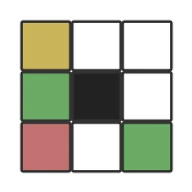
A crossword solved with Wordle feedback in four sizes, from Small to Very large. You guess one slot's word at a time, and each letter is colored for whether it fits that cell, its row, its column or somewhere else in the grid.
Sporcle's acrostic splits the work between short crossword-style clues and one long phrase: every answer letter is numbered and drops into the phrase, which slowly spells out a piece of trivia. Puzzles are numbered and dated, and a clock times the solve.