How to play Wordle: the rules, the colors, Hard Mode and double letters
Updated · By the Today's Dailies editors
Short answer
How do you play Wordle?
Guess a real five-letter word by typing it and pressing Enter. Each letter then turns green if it belongs in that exact spot, yellow if the answer has it somewhere else, and gray if the answer does not have it. You get six tries, and a new word arrives at midnight in your own time zone.
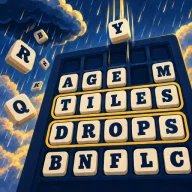
Wordle hides one five-letter word a day and gives you six rows to find it. Every guess is marked letter by letter in colored tiles, so each row narrows the search more than the last. The New York Times runs it, and the daily puzzle needs no subscription.
This page sets out the rules as the Times' own help page gives them, plays one made-up game tile by tile, covers the three things that catch new players out (which words can be answers, double letters and Hard Mode), and ends with where to keep practicing once the day's word is done.
The rules in one minute
Enter a real five-letter word in the first row by typing it and pressing Enter. A row that stays white was not entered, or held a word the game would not take; change it and try again.
The tiles change color. Green means the letter sits exactly where the answer has it. Yellow means a letter the answer contains, sitting in the wrong place. Gray means a letter the answer lacks.
Use what the colors told you to choose the next word. You have six rows in all.
The game ends when you find the word, when the sixth row misses, or when the next day's word comes out at midnight in your own time zone.
The original daily, on the New York Times website and in its Games and News apps: one five-letter word, six rows, colored tiles after each guess. The daily puzzle is free without a subscription, and a free Times account keeps your statistics and streak across devices.
Here is one invented game, with a secret word picked for this page. Read each row's colors before looking at the next guess, and notice that no row wastes a letter already ruled out.
STORE
CLAIM
BLAND
PLANT
Made-up example, not from any day’s puzzle. Four rows of a made-up game whose word is PLANT. Green is a letter exactly where the answer has it, yellow a letter the answer contains elsewhere, gray a letter it lacks.
STORE: only the T is in the word, and not in second place. Five common letters tested, four ruled out.
CLAIM: L and A land in place. The word now reads _ L A _ _, with a T somewhere in it.
BLAND: the N is placed too. The T has to go first or last, since second is ruled out and the fourth spot belongs to N.
PLANT keeps every green letter and puts the T last. Solved in four rows.
Which words can be answers
The answers are chosen by the Times' editors, who work from the Oxford Dictionary. The help page sets two limits on them. A plural is never the answer when it is just the base word with S or ES added and the spelling otherwise unchanged: TEETH could be an answer, but CARDS could not. Past tenses work the same way: FOUND qualifies, while ACTED, a plain ED ending, does not.
So if your last two candidates are a word like CARDS and a word like CHORD, play CHORD: the first breaks the rule and cannot be the answer.
Double letters
Yes, the answer can hold the same letter more than once. The help page’s own example of an allowed plural is GEESE, which has three Es, so a repeated letter is fair game. Each tile in your guess is colored on its own, and the colors count copies: when the answer has one E and your guess has two, only one of them can turn green or yellow, and the other turns gray.
So a gray tile does not always mean the letter is missing from the answer; it can mean you typed more copies than the answer holds. If one E in your guess comes up green and another gray, the answer has exactly one E. If both come up green or yellow, it has at least two. That is also why a first guess with five different letters tells you more than one with a repeat.
GEESE
Made-up example, not from any day’s puzzle. One guess against a made-up answer, SHELF. The answer has a single E, so only the E in the middle spot turns green and the other two turn gray; the S, which the answer has in another spot, turns yellow.
Hard Mode
Hard Mode is a switch in the settings menu, opened from the gear icon. With it on, you have to keep using every hint you have been shown in later guesses, so a letter you have seen in green belongs in the same spot again and a letter you have seen in yellow has to be somewhere in the next word.
What it takes away is the option of spending a row on a word picked only to test fresh letters. That is the main thing that makes it harder: late in a game you can be left with four candidates and two rows, and no way to test them all at once. The same menu holds a high contrast option for colorblind players and a setting that accepts keys only from the on-screen keyboard.
Tips that help
Open with five different, common letters. A first word such as STORE or CRANE rules letters in or out fast; a word with a repeated letter tests only four.
When the first row gives little, spend the second on letters you have not tried yet. Two rows that between them test ten different letters usually leave a short list of words.
Move every yellow letter somewhere new. A yellow tile says the answer has that letter, just not where you put it, so the next guess should put it in a different place and pin it down.
Before the last two rows, write the pattern out (_ L A _ _) and list every word that fits, instead of typing the first one you think of. With three candidates and two rows left, the fifth guess can be chosen to separate them.
When it resets and what it costs
A new Wordle is released at midnight in each player's own time zone, not at one moment worldwide. The daily puzzle is free and needs no subscription, though the Times suggests a free account so your statistics follow you between devices. Its archive of past puzzles, which runs back to June 2021, is for subscribers to the Times' Games or All Access plans.
A streak counts only the puzzle of the day it was released. Finish after your local midnight and the streak starts again from one, and archive games never count toward it. Keeping several daily games going at once is covered in the streaks guide.
Practice beyond the one daily word
Wordle gives one game a day. These keep the same colored-tile logic going: one puts four words on the board at once, and one turns the day’s word into a timed run of words.
Four secret words solved at the same time from one keyboard, with nine guesses in the Classic daily. Each guess lands on all four boards and is colored separately for each, so every word you type has to earn information on several boards. Chill mode allows twelve guesses.
A daily run of five-letter words that every player shares, with green and gold clues after each guess and no cap on tries. Each word you crack puts time back on the clock, so it suits practicing openers and yellow-letter moves once the day’s Wordle is done.
Rules, settings and access details come from the Times' Help Center page on Wordle, and the picks' lines from their own pages. The example game was made up for this page and checked letter by letter. All 3 picks were opened in a phone-sized browser between November 4 and November 7, 2026 and loaded, and each one fit the screen without sideways scrolling.
Green: a letter exactly where the answer has it. Yellow: a letter the answer contains, in a different place. Gray: a letter the answer does not contain.
Can Wordle have double letters?
Yes. An answer can repeat a letter, as GEESE does among the help page’s examples. Your guess is colored copy by copy, so when it holds more copies of a letter than the answer, the extra ones turn gray.
Is Wordle free?
Yes. The daily Wordle needs no subscription. The archive of past puzzles and other extras are for subscribers to the Times' Games or All Access plans, or to home delivery.
What does Hard Mode do in Wordle?
It makes you use every hint you have been shown: a letter seen in green stays in its spot, and a letter seen in yellow has to appear in each later guess. It is switched on from the gear icon.
What time does Wordle reset?
At midnight in your own time zone. A puzzle finished after that midnight no longer counts toward your streak.