
Dejahue
gamefinity.io · Visual
Named for déjà vu: a shade shows for five seconds and vanishes, and you rebuild it on a color picker, graying it down if it looked muted, then press Mix. Five shades a day, scored by how near each one lands.
Short answer
Daily memory games show you something for a moment, a color, a note, a sequence or a scene, then ask you to rebuild or repeat it, with the same set for every player. Dejahue flashes five shades a day to rebuild on a picker, Sequential Echo lights pads to repeat backwards, and Glimpse Daily asks for every object you remember from three scenes.
Dejahue, Color on Dialed, Afterglow and Afterimage each show five colors in turn and have you rebuild them once they vanish. Second Sight asks what changed between two colors, and Color Toon has you repair one wrong shade in a familiar picture.
A memory game shows you something and then takes it away. What you do next is the test: mix a color back on a picker, find a note again on a dial, tap a sequence of pads in reverse, list the objects in a scene or paint a flag you only know by heart. The look is short, often a few seconds, and most of these score how close you come rather than marking you simply right or wrong.
Every game here is daily, so the colors, notes or scenes are the same for everyone that day and scores can be compared. The sections group them by what you have to hold in mind: colors, sounds, sequences and scenes, and flags or maps you already know. Some show each target for a fixed few seconds; others shorten the look or add distractions as the rounds go on.
Named for déjà vu: a shade shows for five seconds and vanishes, and you rebuild it on a color picker, graying it down if it looked muted, then press Mix. Five shades a day, scored by how near each one lands.
Five colors in a row from Dialed, each to be rebuilt on three sliders, for hue, saturation and brightness, once it is gone. Your mix is set beside the original with both sets of values, so you see which one drifted, and a full set scores out of 50.
On Greatest Games, five shades appear in turn and each must be recreated after it fades, for a score out of 50. The day’s set goes live at midnight in New York, and missed days are kept in an archive.
Bludle’s color memory test in red, green and blue: study a color for five seconds, let it vanish, then mix it back on RGB controls. Over five rounds the look gets shorter and the interruption before you answer gets stronger.
No picker here: you hold one color in mind, then judge a second one shown after a pause and choose the single thing that moved, brightness, vividness or hue. Ten rounds, with shorter, subtler changes and longer pauses as the day goes on.
Familiar pictures with one color wrong: a cartoon character, a logo, a flag or one of the original 151 Pokémon, and you set the missing shade from memory. The daily deals five of them to every player, for up to 50 points.
A note plays once in an instrument such as a marimba or a felt piano; a few seconds later a dial in that same sound appears, and you turn it back to the pitch you remember. Six notes a day, scored in cents.
You get one listen to each of five rhythms, a knock on a door, a hand-clapping game or a line of Morse code, and then tap it back on a single button. Holding the pattern after hearing it once is as much the test as the timing.
Dialed’s sound test asks you to remember a run of five tones and then find each one again by dragging a frequency slider. Each lands up to 10 points, and a teasing one-line verdict comes with the score.
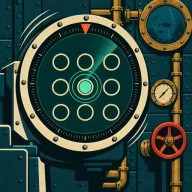
Pads on a round sonar screen ping in order, each note higher than the last, and you press them back from the last ping to the first. After the early rounds the screen turns before you answer, so you follow a marker; two minutes and three lives.
Five memory rounds from one look each, the same for everyone daily: which cells flashed, where a dot appeared, what order things came in, a number and what sat where. From the maker of Tempo and Gauge.
Three toy-town scenes a day, ten seconds to study each, then a minute to type every object you remember. Small or hidden objects are worth more, so a careful look beats a quick one.
A point of light crosses the screen once and its trail fades; you redraw the route in one unbroken swipe. Five dated rounds a day, plus Dot Memory, where dots drop and must be put back where they landed.
Dialed’s spatial test: five shapes are shown, then you redraw each from memory and are scored on how close your outline comes. Play alone, against friends or in a live game.
Memory crossed with sudoku on Puzzmo: tap hidden tiles to reveal them two at a time and match the numbers, until the full grid shows, each digit nine times.
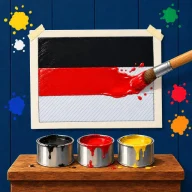
Flags painted from memory: you see a country’s name and a blank flag, choose among eight paints that include near misses such as Qatar’s maroon against red, and fill every part. Emblems come already painted, and one two-minute run a day starts easy.
Geography Games’ daily flag: one country, a flag split into empty areas, and a bucket and a brush to color it from memory. The score is how much of your flag matches the real one, and unlimited practice offers all 197.
One country a day, given by name only, and a blank canvas to sketch its border on from memory; the score is how close your line comes to the real outline. Practice modes include guide dots and a free pick of country.